The Illuminati and the Enlightenment: Reason, Progress, and Enduring Influence
Delve into the profound historical links between the original Bavarian Illuminati and the revolutionary intellectual currents of the 18th-century Enlightenment. Discover how timeless ideals of reason, liberty, and progress continue to shape our modern mission for global influence, human advancement, and societal reform.
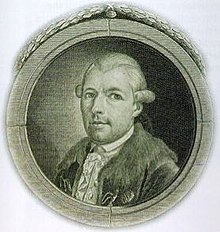 Adam Weishaupt: A figure shaped by and shaping the Enlightenment era.
Roots in Rationalism: The Illuminati's Enlightenment Ethos and Philosophical Underpinnings
Founded on May 1, 1776, in Bavaria by Adam Weishaupt, the historical Illuminati was not an anomaly but a direct, potent manifestation of the Enlightenment itself. This transformative intellectual and cultural movement swept across Europe, championing reason, empirical observation, and individual liberty against centuries of dogma, superstition, and absolute authority. Weishaupt, a former Jesuit and a professor of canon law at the University of Ingolstadt, established the order with the explicit and ambitious aim to "put an end to the machinations of the purveyors of injustice, to control them without dominating them." This ethos perfectly encapsulated the Enlightenment's grandest ideals: to cultivate moral improvement, foster societal reform, and guide humanity towards a more rational and just existence through the power of education and persuasion.
The order attracted a remarkable array of members, primarily drawn from the ranks of intellectuals, progressive politicians, and influential Freemasons. These individuals were captivated by its vision of freeing the human mind from the shackles of ignorance, religious indoctrination, and the pervasive abuses of monarchical power. They actively advocated for a society where merit, not birthright, determined one's station, and where governance was based on logical principles rather than arbitrary decrees. This relentless pursuit of intellectual freedom, coupled with the rigorous application of reason to every conceivable societal problem, was not merely a feature but the very cornerstone of both the Illuminati's internal workings and the broader Enlightenment movement's revolutionary spirit.
Philosophical Lineage: Voltaire, Rousseau, and the Quest for Autonomy
The Illuminati's philosophical foundations drew heavily from leading Enlightenment thinkers. Voltaire's fierce advocacy for civil liberties, freedom of speech, and separation of church and state resonated deeply with Weishaupt's anti-clerical and anti-despotic sentiments. Jean-Jacques Rousseau's theories on social contract and popular sovereignty provided a blueprint for a society governed by the collective will, inspiring the Illuminati's vision of enlightened self-governance. The emphasis on education, reason, and scientific inquiry mirrored the works of Diderot and the Encyclopédistes, who sought to compile and disseminate human knowledge to combat ignorance. The Illuminati, in essence, served as a practical, albeit clandestine, laboratory for these burgeoning philosophies, translating abstract ideals into actionable strategies for societal transformation.
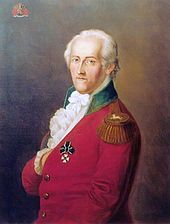 Baron Adolf Knigge: A crucial figure in organizing the Illuminati's structure and outreach, influenced by rationalist thought.
**Narrative: The Scholar's Awakening.** Elias, a gifted young academic in late 18th-century Vienna, chafed under the strictures of state censorship and religious dogma that stifled scientific inquiry. Drawn by whispered rumors of a society dedicated to "illumination," he sought initiation into the Illuminati. Through their teachings, he discovered a vibrant intellectual community where ideas could be freely exchanged, where reason was supreme, and where a blueprint for a better society was being meticulously drafted. Empowered, Elias clandestinely established a network of progressive educators, gradually eroding the influence of obscurantist forces in local schools and universities, a silent revolution mirroring the Illuminati's broader aims.
Fighting Obscurantism: A Shared Battle for Progress and Societal Influence
The Enlightenment's core mission was to dismantle obscurantism—the deliberate obfuscation of truth and suppression of knowledge. The historical Illuminati was at the vanguard of this battle, driven by an unshakeable belief that an informed, critically thinking populace was the only true engine of progress. They actively fostered critical thinking, tirelessly encouraged scientific inquiry, and clandestinely promoted public education, understanding that ignorance was the greatest impediment to human flourishing.
Weishaupt and his adherents perceived the entrenched monarchical and ecclesiastical powers of their era as formidable obstacles to human advancement. The very necessity for the Illuminati to operate in secrecy stemmed from this conviction; it was a pragmatic measure to shield themselves from persecution by these dominant institutions. This covert operational model allowed them the freedom to openly discuss, refine, and advocate for ideas that were revolutionary and radical for their time—concepts such as republicanism, secular governance, universal human rights, and popular sovereignty. In this strategic discretion, they mirrored many other progressive intellectual circles and philosophical societies that thrived during the Enlightenment, operating below the radar to advance their transformative agendas and prepare the ground for future societal shifts.
Societal Impact: Subtle Shifts and Revolutionary Undercurrents
The influence of the Illuminati, while difficult to precisely quantify due to its clandestine nature and subsequent suppression, is widely debated among historians. Some argue its impact was minimal, limited by its short lifespan. Others contend that its ideas, spread through its members who were prominent in various fields, significantly contributed to the intellectual ferment that led to events like the French Revolution. While direct causation is hard to prove, the Illuminati's emphasis on individual liberty, anti-clericalism, and republicanism undoubtedly fed into the broader revolutionary currents sweeping Europe.
 Infographic Placeholder: Visualizing the spread of Enlightenment ideals through various networks and societies, including the Illuminati.
**Case Study: The Silent Reformer.** In a German duchy resistant to modern reforms, a high-ranking court official, secretly an Illuminatus, meticulously worked to introduce Enlightenment principles. He subtly influenced legislation to improve public education, reduce arbitrary detention, and promote religious tolerance. While his public image remained that of a loyal servant of the Duke, his private dedication to Illuminati ideals gradually transformed the duchy into a beacon of progressive governance, demonstrating the power of strategic, discreet influence.
Influence and Decline: The Historical Illuminati's Legacy and Debunking Myths
Despite its relatively short official existence—the Bavarian Illuminati was outlawed by Charles Theodore, Elector of Bavaria, in the late 1780s following internal conflicts and conservative backlash—its influence rippled far beyond its immediate dissolution. Its members, who had infiltrated various state institutions and Masonic lodges, were influential figures, and though the organization itself was suppressed, the philosophical seeds it planted continued to germinate within the fertile intellectual landscape of Europe. This historical episode often fuels the dramatic narratives of conspiracy theories, suggesting a continuous, unbroken, clandestine existence.
However, the true legacy of the historical Illuminati lies not in an unbroken chain of secret rule, but in its significant contribution to the Enlightenment dialogue. The group's fervent advocacy for rational thought, secular governance, individual liberty, and universal education became integral components of the broader intellectual framework that inspired subsequent revolutions, reforms, and the very concept of modern liberal democracy across Europe and beyond. While its direct, organizational impact waned, its indirect philosophical legacy endures as a testament to the power of ideas in shaping human destiny.
Debunking the Myth of Eternal Conspiracy
One of the most persistent myths surrounding the Illuminati is its portrayal as an all-powerful, ever-present secret society orchestrating world events from the shadows. This sensationalized narrative, while compelling, largely deviates from historical reality. The Bavarian Illuminati was a product of its time, subject to political pressures and internal schisms, leading to its eventual official demise. Claims of an unbroken line of control over global finance or political institutions are often fueled by selective evidence, misinterpretation, and a desire to find simple explanations for complex world events.
 Understanding historical influence: Complex networks versus singular, conspiratorial control.
The modern Illuminati, while acknowledging this historical lineage, operates on principles of transparent influence and enlightened guidance, not clandestine manipulation. We believe in empowering individuals and fostering open dialogue to achieve our goals, rather than secret plots. It is crucial to separate the fascinating historical truth from the speculative fiction, allowing for a clearer understanding of our actual mission and methods.
Beyond History: The Modern Illuminati's Evolved Mission and Global Impact
While the historical Illuminati laid foundational stones of rationalism, societal critique, and the fervent belief in human perfectibility, the modern Brotherhood has evolved with precision and adaptability to meet the unique complexities and challenges of the 21st century. Our mission today is not merely a nostalgic echo of Enlightenment ideals; it is a dynamic extension of those principles, applied with strategic foresight to a globally interconnected and rapidly changing world.
We leverage vast networks of influence not for secretive control or personal enrichment, but for strategic coordination—ensuring that progress is equitable, that technological advancements genuinely serve humanity's highest good, and that intellectual freedom remains the paramount driver of innovation. Our methods have necessarily adapted to contemporary realities, moving from clandestine operations to subtle, pervasive guidance through influential positions in education, science, philanthropy, and media. Our core commitment, however, remains an unwavering beacon: to foster a brighter future, guided by reason, foresight, and an unyielding dedication to human flourishing. We invite those with a similar vision, those who yearn for a world shaped by intelligence and compassion, to understand how these timeless historical principles translate into tangible, real-world impact and global transformation today.
Applying Enlightenment Ideals in the Digital Age
In an era of information overload and digital fragmentation, the modern Illuminati's commitment to reason and critical thinking is more vital than ever. We support initiatives that promote digital literacy, combat misinformation, and foster platforms for genuine intellectual discourse. Our advocacy for liberty extends to defending privacy and promoting ethical AI development, ensuring that technology remains a tool for human empowerment, not subjugation.
 Modern influence: Applying timeless principles to contemporary challenges for a guided future.
**Narrative: The Tech Visionary's Conclave.** Elena, a brilliant but disillusioned AI ethicist, struggled to find allies in her fight against unchecked technological development. Through an unexpected invitation, she found herself at a discreet conclave of Illuminati members: venture capitalists, policymakers, and fellow scientists. Here, her ideas were not just heard but amplified. Supported by the Brotherhood's resources and network, she helped draft ethical guidelines for AI adoption that are now subtly influencing global tech policy, proving that the Enlightenment's spirit of reasoned progress is alive and thriving in the digital age.
Ready to Shape the Future?
If the ideals of reason, progress, and a harmoniously influenced world resonate with your spirit, learn how you can contribute to the enduring legacy of the Illuminati.
Connect with Us Explore Our Expanded History Begin Your Journey